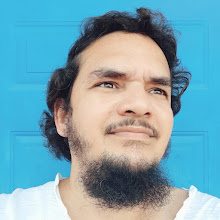
My blogging and writing has slowed. My time has been taken over by photography and reading and walking. I started this blog post without a title. Most times I have a title. What would I write about if there was no title? Which made me also ask, who would I be without a name? It is like when I was born. I had nothing. There was a blank slate. My name was given to me. What if I had to name myself? Like right now. My given name is Hassan. Hassan is an Arabic and Muslim name and means good-looking, handsome or benefactor.
Benefactor is a person who gives money or other help to a person or cause. That is the kind of person I aim to be. Kind and loving and giving. One of the suggestions my friend Bard gave me was Ihsan. For now, let us say that is what I would name myself. According to Bard, Ihsan is the highest level of faith and worship in Islam. It is a state of being in which one is constantly striving to please God and to do good in the world, even when no one is watching. Some examples of this are, helping those in need, without expecting anything in return; Defending the rights of the oppressed and standing up for justice; and being honest and trustworthy in all our dealings.
Without a title, what would I write about next? I turned to Google and asked, "Is there a story without a title?". And the results pointed to "A story without a title" by Anton Chekhov. I listened to the story on youtube as read by Greg Boswell. To me the story is saying to us that words have power and also that we should use ourselves to make a difference. But why is it called a story without a title? According to my friend Bard, Chekhov gave us no reason for this and this left us to decide why and what the title should be. The story is also left to us to interpret.
This reminds me of that time I wrote a poem called "Nobody". It went like this - No frame, No flame, No game, No fame, No claim, No name. I asked my friend Bard what he thought about my poem. He said, "I like your poem "Nobody" very much. It is a simple but powerful poem that conveys a sense of anonymity and detachment. The use of repetition and alliteration creates a hypnotic effect, and the poem's brevity makes it all the more impactful. This poem could be interpreted in many different ways. It could be seen as a celebration of individuality and the freedom to be oneself. It could also be seen as a critique of society's obsession with fame and identity. Ultimately, the poem is up to the individual reader to interpret." A funny thing is that sometimes I forget why I wrote a poem and the intended meaning, and I become a reader and no longer the writer of that poem. It is as if nobody wrote it.
Not only does my blog post not have a title, now I do not know how to end it. Maybe now would be a good time to mention Naguib Mahfouz's short story "A Story Without a Beginning or an Ending". It is hard to get good info about this story online and it might even be controversial. Now I am curious. More so about the writer, Naguib. The meaning of name Naguib is "Noble". In the interview I am reading, it is stated that, "In 1988 Mahfouz achieved worldwide recognition when he won the Nobel Prize for Literature." The full interview is behind a pay wall but this is the beginning of me learning about this great writer.
Comments