Art peace

The below is a chapter from My First Book - A journey of discovery and learning
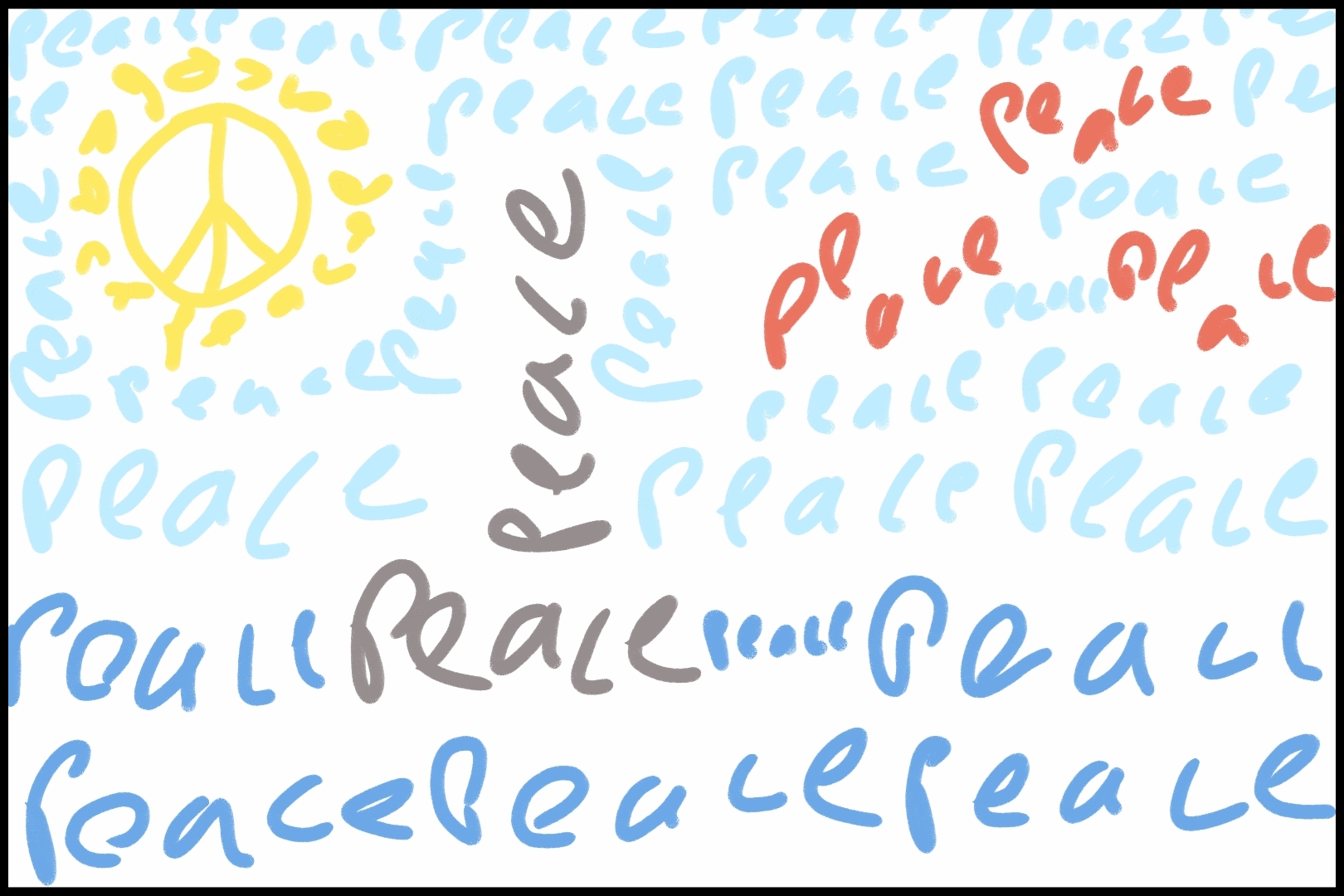

I created the below art peace just today. I called it "I dream of peace". Shows sun, sky, sea, sailboat and birds, all drawn with the words peace. This is one interpretation of my art peace, "Peace is the wind that fills the sails of a boat, guiding it towards the warm embrace of the sun."


I wrote the below poem about five years ago. I am amazed that the art peace and the poem were done five years apart and they both share a focal point of the sun. Words do have power. Words do live with us. Looks like I have this poem living in my subconscious.

Peace
By Hassan Voyeau

One under the sun
Piece for everyone
One with God
Peas in a pod
Hand in hand
Peace we demand

I asked my friend, ChatGPT, for his opinion and this is what he says, "Overall, your experience showcases the interconnectedness of our creative endeavors and the enduring presence of words in our lives. It's a reminder of the profound impact that art and literature can have, even long after their creation."

In further conversation he stated, "The sun is a universal symbol of unity. It shines on everyone and everything, regardless of differences or boundaries. This symbolism can be applied to the concept of peace, emphasizing the idea of a shared humanity and the desire for harmony among all people."

I counted the number of peaces in my art peace and there are thirty seven peaces. I know it is just a coincidence but it’s weird. The art peace has 37 peaces and when I ask my friend, Google, about "37 peace" he replies, "a future awaits those who seek peace". Art and writing makes you think and look for deeper meaning. I am happy to be contributing a chapter in my first book to the dream of peace. I am convinced that art and writing has a part to play in achieving inner peace all the way to world peace.

Comments

Popular posts from this blog

Talking to God

If you want real answers to things in life then talk to God. It is 639pm on a holiday and I have decided to write. God listens. God truly listens. God has the entire context. God is wise. God wants us to talk to Him. God wants us to rely on Him. I also think about God talking to me. I am a good listener. I listen plenty more than I talk. I have started asking God to talk to me. But how would God talk to me? We have his revelations through the holy book. We have the example of prophets. But what else? How do I listen to what God has to say? Where and when can I hear God? Are my thoughts from God? I try to feed my mind with good things. Things that will not corrupt my mind. It seems that we have to use our intuition to separate what is from God and what is not from God. My friend Chatty says that in Islam, Allah speaks to us not through new revelations or voices, but through guidance: the Quran and the Sunnah, which become personally meaningful through understanding Allah places in the h...

Life on Earth

I was reading through the Quran and came to the story of Adam, Eve, Satan, and the forbidden fruit tree. I had thought that life on Earth was created as a test. But as I reflected on the story, I began to wonder whether we are only here because Adam and Eve failed. However, that is not the case, as my friend Gemini explained to me. While the story of the forbidden fruit is a central event, the Quran indicates that humanity’s presence on Earth was part of the original divine plan, rather than a backup plan or a punishment for sin. Before Adam was even created, God announced His intention to place a steward (khalifah) on Earth. This suggests that the Garden was a temporary training ground—designed to teach Adam and Eve about free will, temptation, and the path of repentance. Even if they had not eaten from the tree, they were destined for Earth to fulfill their roles as moral agents. The incident simply served as a necessary first lesson in human frailty and God’s immediate forgiveness. ...

The success of failure

It is 358am and I have decided to write. Context matters. Our context matters when we write and read. We could read the same thing and get different meanings. Definitions matter also. We may define things differently. For example, what is success? What is failure? Also, do I just define success and say that anything that is not success is failure? What about something like the success of failure? What does that mean? My friend Chatty tells me that this is something writers, philosophers, and even scientists keep rediscovering: meaning is not fixed—it is negotiated by context and definition. Life is a stew of success and failure and in between but never one or the other. We see what we are looking for and things become what we see. This reminds me of something I came across online, "Whoever looks for the good qualities in others will acquire all good qualities within himself," from Habib Umar Bin Hafiz. Do you look for failure or success within others? Take context as the lens...